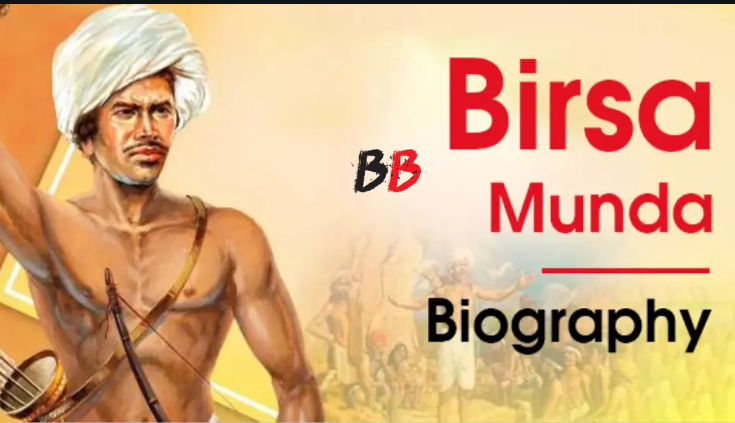
Birsa Munda Biography – Birsa Munda, a name that resonates with courage and resistance, was a significant figure in India’s struggle against British rule. Born on 15 November 1875, Birsa Munda’s life, though short, was marked by extraordinary achievements and a lasting legacy.
Let’s look into the life of this tribal hero, exploring his birth, family background, and his monumental role in India’s freedom movement.
Birsa Munda Biography
| Attribute | Details |
|---|---|
| Name | Birsa Munda |
| Birthday | 15 November 1875 |
| Birth Place | Ulihatu, Khunti, Jharkhand |
| Father’s Name | Sugana Munda |
| Mother’s Name | Karmi Hatu |
| Death | 9 June 1900 |
| Age at Death | 24 years |
| Significant Movement | Munda Rebellion (Ulgulan) |
Who is Birsa Munda?
Birsa Munda was an Indian tribal independence activist and folk hero belonging to the Munda tribe. His life and actions led to the Munda Rebellion against British rule, making him a pivotal figure in Indian history.
Birsa Munda’s Birthday and Birth Place
Birsa Munda was born on 15 November 1875 in the village of Ulihatu, located in the Ranchi district of Bengal Presidency, which is now in Khunti district, Jharkhand. This date is celebrated as Birsa Munda Jayanti, honoring his contributions to India’s independence.
Family Background
- Father’s Name: Sugana Munda
- Mother’s Name: Karmi Hatu
Birsa Munda’s Early Life
Birsa’s early years were spent in the rural setting of Chalkad, where he lived a life similar to other Munda children. He was known for his physical strength, good looks, and skills in playing the flute and the tuila, a traditional one-stringed instrument.
Education and Early Influences
Birsa received his early education in Salga under the guidance of his teacher, Jaipal Nag. He later attended the German Mission School, where he converted to Christianity and was baptized as Birsa David. However, disillusioned by the British efforts to convert tribals through education, Birsa left the school and returned to his roots.
Formation of Birsait Faith
After leaving the German Mission School, Birsa Munda founded a new faith known as Birsait. This faith soon gained followers from the Munda community, challenging the British missionaries and their conversion activities.
The Munda Rebellion
The Munda Rebellion, also known as the Ulgulan or “The Great Tumult,” was primarily against the British colonial system and the local zamindari system. Birsa Munda led the movement, which focused on ending the exploitation and oppression of the tribal communities.
Challenges Against British Rule
Birsa Munda openly declared the British as the real enemies of the tribal people. The unfair land grabbing practices by colonial authorities were a significant cause of the Munda revolt. Birsa’s leadership in this revolt is a testament to his determination and vision for a free and fair society.
Imprisonment and Death
Birsa Munda was arrested by the British authorities and imprisoned in Ranchi Central Jail. He died in custody on 9 June 1900 at the young age of 24. His death remains a significant event in the history of India’s struggle for independence.
Legacy and Recognition
Birsa Munda’s legacy lives on through numerous tributes, including his portrait in the Indian Parliament Museum. His life and contributions are commemorated annually on Birsa Munda Jayanti.
Birsa Munda’s Influence on Modern India
Birsa Munda’s fight against the British colonial system and his efforts to protect tribal land rights have left an indelible mark on Indian society. His life is a source of inspiration for many, especially in the states of Jharkhand, Odisha, Bihar, West Bengal, and Madhya Pradesh.
Education and Cultural Impact
Birsa’s approach to education and cultural preservation has influenced many tribal communities to value and uphold their traditions. His life story is taught in schools, ensuring that future generations remember his contributions.
Birsa Munda in Popular Culture
Numerous books, movies, and plays have been produced to celebrate the life of Birsa Munda. These cultural representations help keep his legacy alive and highlight the importance of his struggle for justice and equality.
Conclusion
Birsa Munda’s life, though brief, was filled with remarkable achievements that have left a lasting legacy. His unwavering commitment to his people and his fight against colonial oppression make him a true hero of India’s independence movement. Let us remember and honor Birsa Munda by continuing to fight for justice and equality in our society.
FAQs
- What was Birsa Munda known for? Birsa Munda was known for leading the Munda Rebellion against British rule and fighting for the rights of the tribal communities in India.
- When is Birsa Munda Jayanti celebrated? Birsa Munda Jayanti is celebrated on 15 November every year, marking his birthday.
- What was the Birsait faith? The Birsait faith was a religious movement founded by Birsa Munda, which challenged British missionaries and aimed to protect tribal traditions and rights.
- How did Birsa Munda die? Birsa Munda died in Ranchi Central Jail on 9 June 1900, under mysterious circumstances while in British custody.
- Why is Birsa Munda considered a hero? Birsa Munda is considered a hero for his leadership in the Munda Rebellion, his fight against British colonialism, and his efforts to protect and uplift the tribal communities.


